Plan an event people will still be talking about.
Great events don't happen by accident. They happen when the right people, programming, space, and details come together with intention.
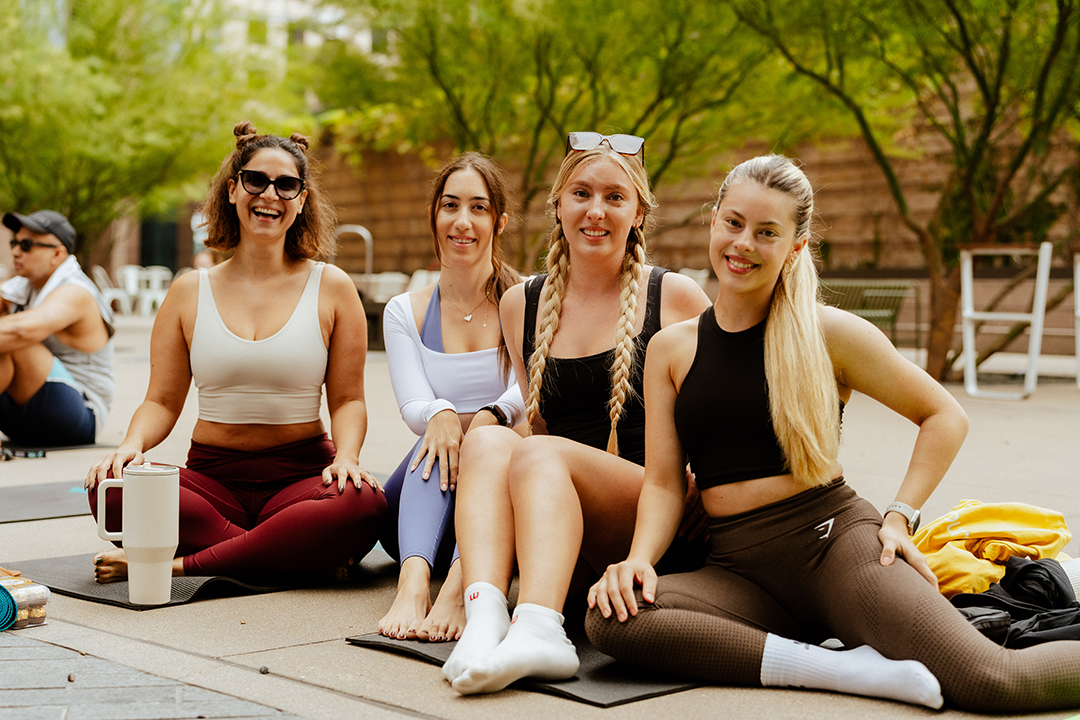
Whether you're planning an event for your own team, building an experience for a client, or helping a group make the most of your venue, this guide will help you think through the decisions that shape the guest experience.
From defining the purpose of your event to choosing the right programming and planning the details, consider this your starting point for creating an event that feels thoughtful, engaging, and worth showing up for.
From defining the purpose of your event to choosing the right programming and planning the details, consider this your starting point for creating an event that feels thoughtful, engaging, and worth showing up for.

step 1
START WITH THE WHY
Before you plan the event, decide what you want it to do.
It's easy to start planning with the logistics: Where will it be? How many people are coming? What should we book? Start one step earlier. What should people experience during the event? What do you want them to take away? What should feel different when they leave? Your answers will shape everything that follows.
Ask yourself:
What's the purpose?
Is the goal to bring people together, celebrate, educate, energize, build relationships, recognize a team, or create an experience around a larger business objective?
Who's attending?
Consider their roles, interests, expectations, familiarity with one another, and how comfortable they may be participating.
What do you want people to remember?
The most memorable event may not be the one with the most activities. It may be the one with one or two moments that people are still talking about afterward.
85% of attendees who have a peak moment are likely to return. (Source: Freeman, End-of-Year Trends Recap (2025))
What does success look like?
Define what you want to see, whether that's participation, connection, engagement, positive feedback, or simply people having a great time together.
Planning principle: Start with the experience you want to create, then work backward into the programming and logistics that will support it.
Ask yourself:
What's the purpose?
Is the goal to bring people together, celebrate, educate, energize, build relationships, recognize a team, or create an experience around a larger business objective?
Who's attending?
Consider their roles, interests, expectations, familiarity with one another, and how comfortable they may be participating.
What do you want people to remember?
The most memorable event may not be the one with the most activities. It may be the one with one or two moments that people are still talking about afterward.
85% of attendees who have a peak moment are likely to return. (Source: Freeman, End-of-Year Trends Recap (2025))
What does success look like?
Define what you want to see, whether that's participation, connection, engagement, positive feedback, or simply people having a great time together.
Planning principle: Start with the experience you want to create, then work backward into the programming and logistics that will support it.
step 2
DESIGN THE EXPERIENCE, NOT JUST THE AGENDA
An agenda tells people where to be. An experience gives them a reason to be there.
A well-organized schedule is important, but an event is more than what happens on stage.
Think about the full guest journey:
ARRIVE → ORIENT → PARTICIPATE → CONNECT → RESET → RE-ENGAGE → DEPART
Every transition is an opportunity to shape how people experience the event.
Instead of asking only: "What happens next?"
Ask: "What do people need in this moment?"
Maybe they need energy after sitting through a presentation. Maybe they need a reason to talk to someone they don't know. Maybe they need somewhere comfortable to recharge. Maybe they simply need something unexpected.
That's where programming can make an event feel intentional rather than simply scheduled.
Think about the full guest journey:
ARRIVE → ORIENT → PARTICIPATE → CONNECT → RESET → RE-ENGAGE → DEPART
Every transition is an opportunity to shape how people experience the event.
Instead of asking only: "What happens next?"
Ask: "What do people need in this moment?"
Maybe they need energy after sitting through a presentation. Maybe they need a reason to talk to someone they don't know. Maybe they need somewhere comfortable to recharge. Maybe they simply need something unexpected.
That's where programming can make an event feel intentional rather than simply scheduled.
step 3
CHOOSE THE RIGHT KIND OF PROGRAMMING
There's no single formula for a great event.
The right programming depends on your audience, goals, space, timing, and desired energy.
Social
Create natural opportunities for people to interact, connect, and spend time together. Think styled lounges, interactive social moments, happy hours, entertainment, and experiences designed for conversation.
Interactive
Give people something to do, explore, create, or experience. Hands-on activations, games, make-and-takes, immersive experiences, and drop-in stations can turn downtime into participation.
Movement
Change the energy of the room and give people a reason to get out of their seats. Movement can range from a short reset to a fully produced group experience.
Custom
Sometimes the right answer doesn't fit into a category.Custom programming can combine different experiences, environments, entertainment, food and beverage, branding, and other elements around a specific event goal.
Don't choose programming because it sounds impressive. Choose it because it supports what you want people to experience.
Don't choose programming because it sounds impressive. Choose it because it supports what you want people to experience.
step 4
THINK BEYOND THE MAIN PROGRAM
Some of the best opportunities happen between the big moments.
Conference breaks. Cocktail hour. Registration. Pre-dinner. Post-session. The hour before a keynote.
These moments can easily become dead time. They can also become some of the most engaging parts of an event. Consider how you can use these windows to create:
A reason to move
Short movement experiences or active programming.
A reason to connect
Social environments, interactive experiences, or shared activities.
A reason to explore
Drop-in stations, demonstrations, make-and-takes, or unexpected activations.
A reason to stay
Comfortable environments, food and beverage, music, entertainment, and experiences that make people want to linger.
This doesn't mean filling every minute. In fact, you shouldn't.
Guests need flexibility to choose how they spend their time.
These moments can easily become dead time. They can also become some of the most engaging parts of an event. Consider how you can use these windows to create:
A reason to move
Short movement experiences or active programming.
A reason to connect
Social environments, interactive experiences, or shared activities.
A reason to explore
Drop-in stations, demonstrations, make-and-takes, or unexpected activations.
A reason to stay
Comfortable environments, food and beverage, music, entertainment, and experiences that make people want to linger.
This doesn't mean filling every minute. In fact, you shouldn't.
Guests need flexibility to choose how they spend their time.
step 5
DESIGN FOR PARTICIPATION
Make it easy to say yes.
Not everyone will want to participate in the same way.Some people will jump into a group activity. Others will watch first. Some will spend five minutes at an activation. Others may stay for thirty.
Good programming gives people options.
MAKE IT OBVIOUS
People should quickly understand what's happening and why they might want to participate.
MAKE IT EASY
Avoid unnecessary barriers, complicated instructions, or long commitments.
MAKE IT FLEXIBLE
Drop-in experiences allow guests to participate around their own schedule.
MAKE IT WORTHWHILE
Give people a reason to engage, whether that's curiosity, connection, creativity, competition, relaxation, or simply having fun.
Participation should feel like an invitation, not an obligation.
Good programming gives people options.
MAKE IT OBVIOUS
People should quickly understand what's happening and why they might want to participate.
MAKE IT EASY
Avoid unnecessary barriers, complicated instructions, or long commitments.
MAKE IT FLEXIBLE
Drop-in experiences allow guests to participate around their own schedule.
MAKE IT WORTHWHILE
Give people a reason to engage, whether that's curiosity, connection, creativity, competition, relaxation, or simply having fun.
Participation should feel like an invitation, not an obligation.
step 6
MAKE THE SPACE PART OF THE EXPERIENCE
Your venue is more than a container for your event.
Look at the entire footprint, not just the ballroom or main stage. Where do people naturally gather? Where do they wait? Where do they pass through? Where is there unused space? Where could an experience create a natural destination?
A well-designed lounge, activation, or station can transform an overlooked area into part of the event experience.
And the best programming considers the physical environment from the beginning, including: Guest flow, Footprint, Visibility, Seating, Lighting, Sound, Power, Equipment, Setup and breakdown, Accessibility, Proximity to food and beverage, Relationship to the main agenda.
The goal isn't to fill space. It's to make the space work harder.
A well-designed lounge, activation, or station can transform an overlooked area into part of the event experience.
And the best programming considers the physical environment from the beginning, including: Guest flow, Footprint, Visibility, Seating, Lighting, Sound, Power, Equipment, Setup and breakdown, Accessibility, Proximity to food and beverage, Relationship to the main agenda.
The goal isn't to fill space. It's to make the space work harder.
step 7
CONSIDER THE DETAILS EARLY
Great experiences still have to work in the real world.
The creative idea is only part of the equation. Before committing to programming, think through the practical details that can affect the experience:
GUEST COUNT
How many people could participate at one time? How quickly can guests move through the experience?
TIMING
Is this a scheduled session, a short break, or a continuous drop-in experience?
SPACE
What footprint is available, and what else needs to happen in that space?
STAFFING
Who's facilitating the experience? Who's managing guests, equipment, and transitions?
PRODUCTION
What equipment, sound, power, furniture, signage, or other production elements are required?
VENUE REQUIREMENTS
Are there venue restrictions around food and beverage, equipment, sound, setup, or outside providers?
EXISTING PARTNERS
How will the programming work alongside the venue, DMC, agency, caterer, production team, sponsors, or other partners?
Bring production into the conversation early. The best concepts are designed to work within the real constraints of the event.
GUEST COUNT
How many people could participate at one time? How quickly can guests move through the experience?
TIMING
Is this a scheduled session, a short break, or a continuous drop-in experience?
SPACE
What footprint is available, and what else needs to happen in that space?
STAFFING
Who's facilitating the experience? Who's managing guests, equipment, and transitions?
PRODUCTION
What equipment, sound, power, furniture, signage, or other production elements are required?
VENUE REQUIREMENTS
Are there venue restrictions around food and beverage, equipment, sound, setup, or outside providers?
EXISTING PARTNERS
How will the programming work alongside the venue, DMC, agency, caterer, production team, sponsors, or other partners?
Bring production into the conversation early. The best concepts are designed to work within the real constraints of the event.
step 8
BUILD IN FLEXIBILITY
The best event plan leaves room for people to be people.
Not everything needs to happen at a specific time.
Consider mixing:
Scheduled experiences: Everyone participates together.
Drop-in experiences: Guests participate whenever it works for them.
Ambient experiences: They add energy to the environment without requiring participation.
Optional experiences: Guests choose whether they want to engage.
A combination of formats gives guests more control over their experience and allows programming to support the agenda without competing with it.
Consider mixing:
Scheduled experiences: Everyone participates together.
Drop-in experiences: Guests participate whenever it works for them.
Ambient experiences: They add energy to the environment without requiring participation.
Optional experiences: Guests choose whether they want to engage.
A combination of formats gives guests more control over their experience and allows programming to support the agenda without competing with it.
step 9
WHEN YOU NEED SOMETHING MORE
Start with what you know. Build from there.
You don't need to have every detail figured out before you start.
Maybe you know the goal but not the experience.
Maybe you have the experience but need help fitting it into the space.
Maybe you have a venue and an audience but need a programming concept.
Or maybe you have a completely custom idea that doesn't fit into a standard package.
That's where an event programming partner can help connect the dots.
At Swift Fit, we can help develop the concept, curate the right experiences, build the environment, coordinate production, and bring the experience to life onsite.
Custom doesn't mean complicated. It means designed around what your event actually needs.
Maybe you know the goal but not the experience.
Maybe you have the experience but need help fitting it into the space.
Maybe you have a venue and an audience but need a programming concept.
Or maybe you have a completely custom idea that doesn't fit into a standard package.
That's where an event programming partner can help connect the dots.
At Swift Fit, we can help develop the concept, curate the right experiences, build the environment, coordinate production, and bring the experience to life onsite.
Custom doesn't mean complicated. It means designed around what your event actually needs.
step 10
YOUR EVENT PLANNING CHECKLIST
Before you start booking, ask:
☐ What's the primary goal of the event?
☐ Who's attending?
☐ What do we want people to feel, do, or remember?
☐ Where are the natural opportunities for programming?
☐ Where are there gaps or downtime in the agenda?
☐ What level of participation makes sense for this audience?
☐ Does the programming work with the venue and physical space?
☐ How much time and space does each experience require?
☐ Who's responsible for staffing and onsite execution?
☐ How will programming work alongside your other event partners?
☐ What needs to be branded or customized?
☐ Are there venue or production requirements we need to address?
☐ Does every element serve the overall experience?
If you removed the programming tomorrow, would the event feel noticeably different? If the answer is no, it may not be doing enough.
☐ Who's attending?
☐ What do we want people to feel, do, or remember?
☐ Where are the natural opportunities for programming?
☐ Where are there gaps or downtime in the agenda?
☐ What level of participation makes sense for this audience?
☐ Does the programming work with the venue and physical space?
☐ How much time and space does each experience require?
☐ Who's responsible for staffing and onsite execution?
☐ How will programming work alongside your other event partners?
☐ What needs to be branded or customized?
☐ Are there venue or production requirements we need to address?
☐ Does every element serve the overall experience?
If you removed the programming tomorrow, would the event feel noticeably different? If the answer is no, it may not be doing enough.
Work with us
Let's build an event people want to be part of.
Whether you're starting with a blank page or looking for the missing piece, Swift Fit can help turn your event goals into thoughtful, engaging programming.