


What the empty mats are telling you
On paper, the support exists. The sessions are optional, the Slack announcement is enthusiastic, and leadership signed off on the budget. Then the day arrives. People log on late. They leave early. They keep one eye on their inbox from the back of the room.
That hesitation reads as disengagement in a spreadsheet. In person, it looks like guilt. Employees hesitate because stepping away is visible, and being visible while teammates are heads-down feels like a risk. Gallup's latest global report puts engagement at 20%, the lowest since 2020 — so the appetite for restoration is real. The hesitation was never about whether people value the session. It's about what attending might cost them.
"Optional" hands the bill to the employee
Optional sounds generous. In practice, it makes every individual run the math alone: Can I afford to be seen leaving my desk at 2pm? Will my manager notice, and how will she read it?
When permission is implied instead of demonstrated, opting out becomes the safer career move — and the people who most need the reset are the least likely to take it. The organizations that fill the room do the deciding for their people. The session sits on the team calendar. The manager confirms coverage in advance. Nobody has to compose a justification in their head on the walk over.
Optional programming
Each employee runs the math alone. Opting out becomes the safer career move. Empty mats, checked inboxes, early exits.
Demonstrated permission
Session on the team calendar. Manager confirms coverage. Nobody composes a justification on the walk over.
People copy their manager's calendar, not the wellness poster
The strongest predictor of turnout we see has nothing to do with the activity itself. It's whether leaders show up. When a VP takes the 2:00 guided stretch slot and blocks it on a calendar everyone can see, the team books the 2:15 behind her. When leadership skips the event, the program reads as something for people with time to spare — and nobody wants to be that person.
We've written before about who lingers longest in the Recovery Lounge at corporate events: it's the directors and VPs, every time. Leadership presence doesn't require a speech. It requires being in the room where employees can see you.
Pause the whole team at once
Individual sign-ups make each attendee the one person who stepped away. A team-wide pause removes that comparison entirely. Nobody falls behind, because nobody kept working.
This is why we build activations as anchored blocks — like a Workplace Reset hour scheduled between meetings — rather than drop-in windows alone. When the pause is collective, attending stops being a personal statement and becomes what the team is doing at 2pm. The Slack channel goes quiet together and comes back together.
Keep it inside the workday
Guilt also spikes when wellness reads as a luxury. A 90-minute offsite during deadline week asks people to defend the time to themselves and everyone around them. A 15-minute compression session two floors down asks nothing.
MOOD Bar
A defined slot with a start and end time. People can see the exact cost before they say yes.
Ear Seeding Station
An appointment with a start time and an end time. The workday stays intact.
Workplace Reset Series
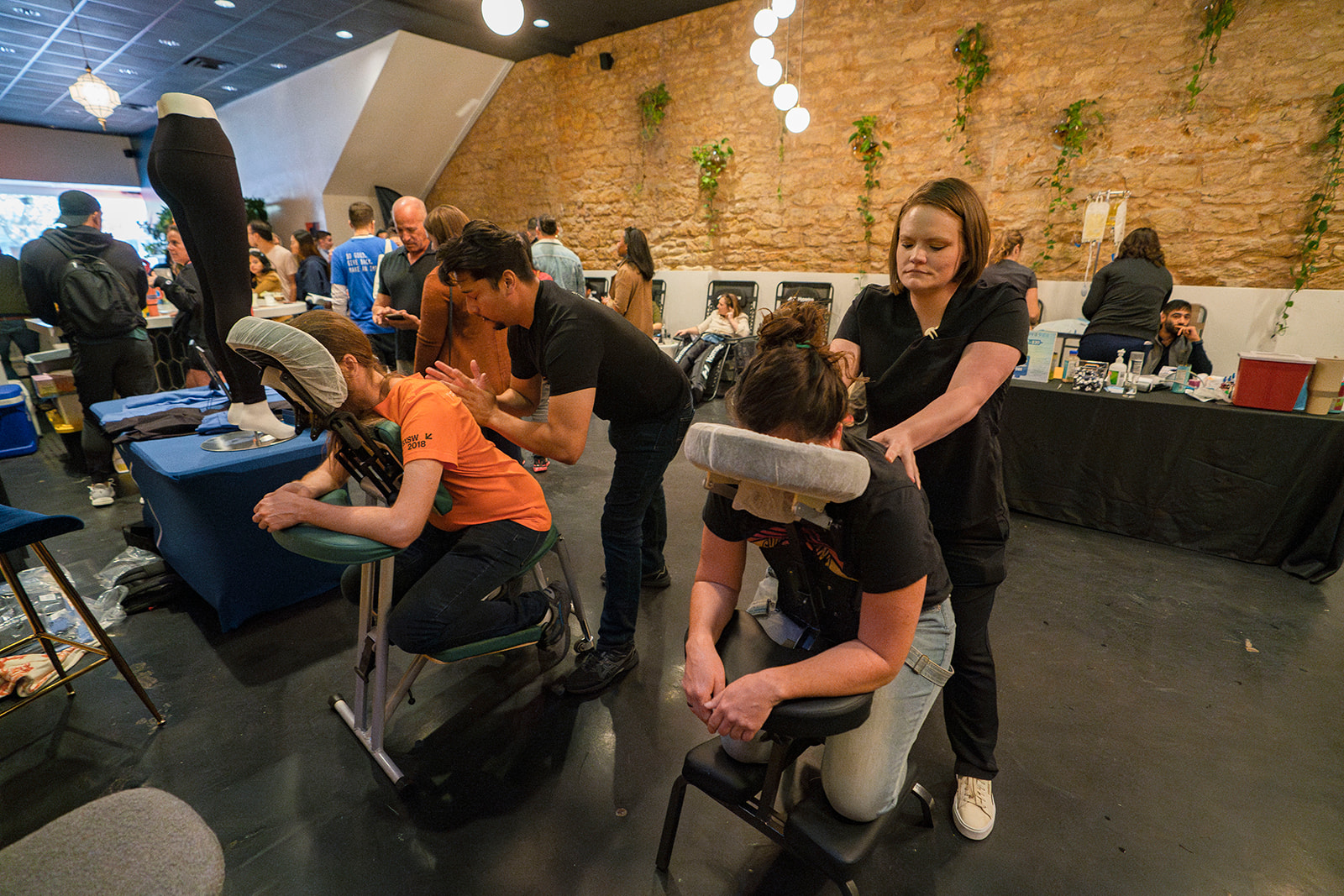
A recurring anchored block between meetings. Nobody drafts an apology email from the massage chair.
Redesign the conditions
If people feel guilty attending, redesign the conditions and keep the program. Put it on the calendar as a default. Get leadership visibly in the room. Pause teams together, and size every experience so it fits inside a working Tuesday.
When permission is demonstrated instead of implied, employees stop asking whether they should attend and start asking when the next one is. Support that requires a defense isn't support yet.
Planning wellness for a team that keeps saying "next time"?
Swift Fit Events designs in-workday activations built to slot into a real schedule — no justification email required.
Start the Conversation →Sources
- Gallup — Global Employee Engagement Continues Decline (Apr 2026)
