



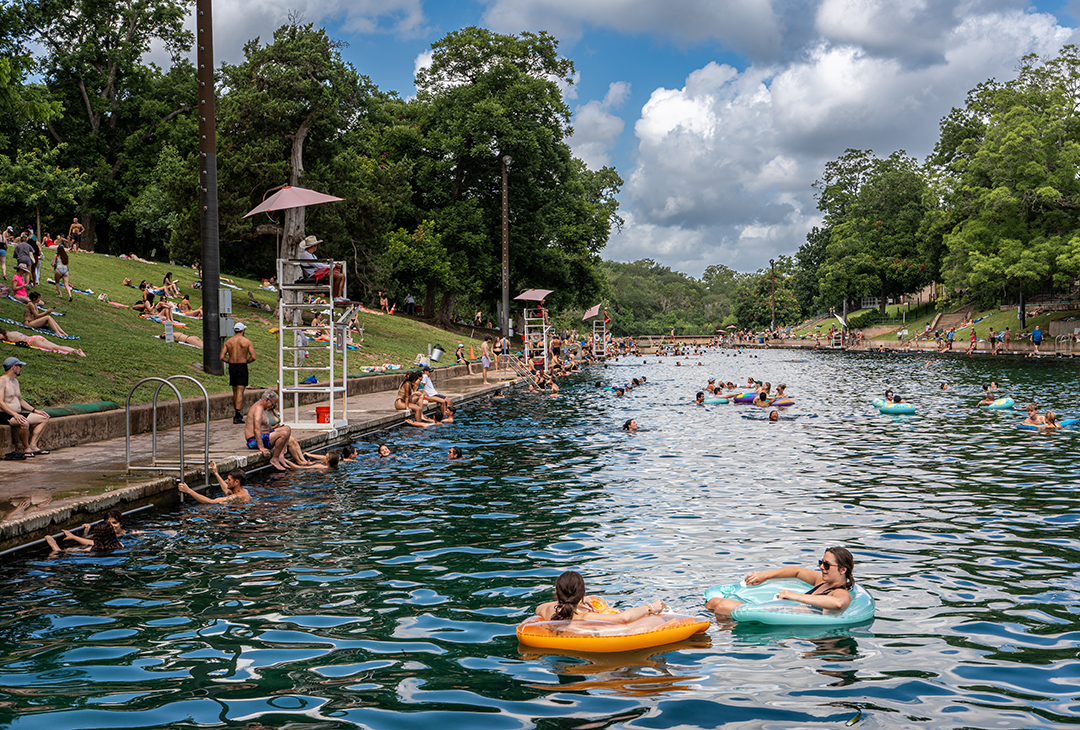
Austin, Texas built its outdoor reputation on the ten-mile Butler Hike-and-Bike Trail in the heart of downtown, and two miles to the south, the crown jewel that started it all: Barton Springs Pool.
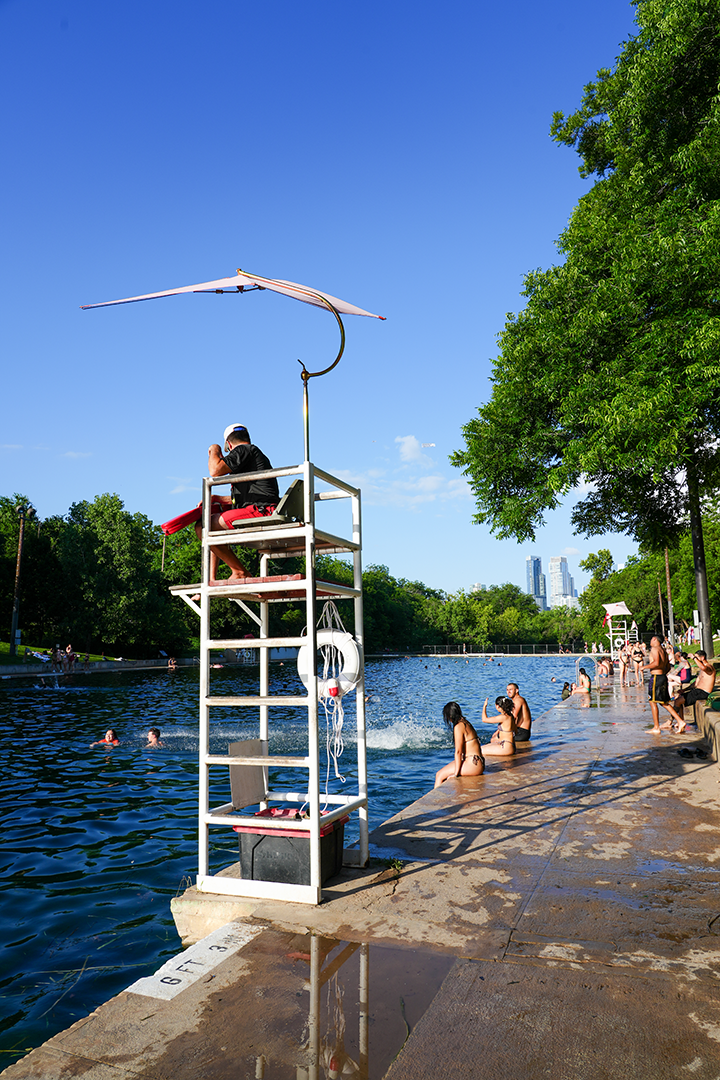
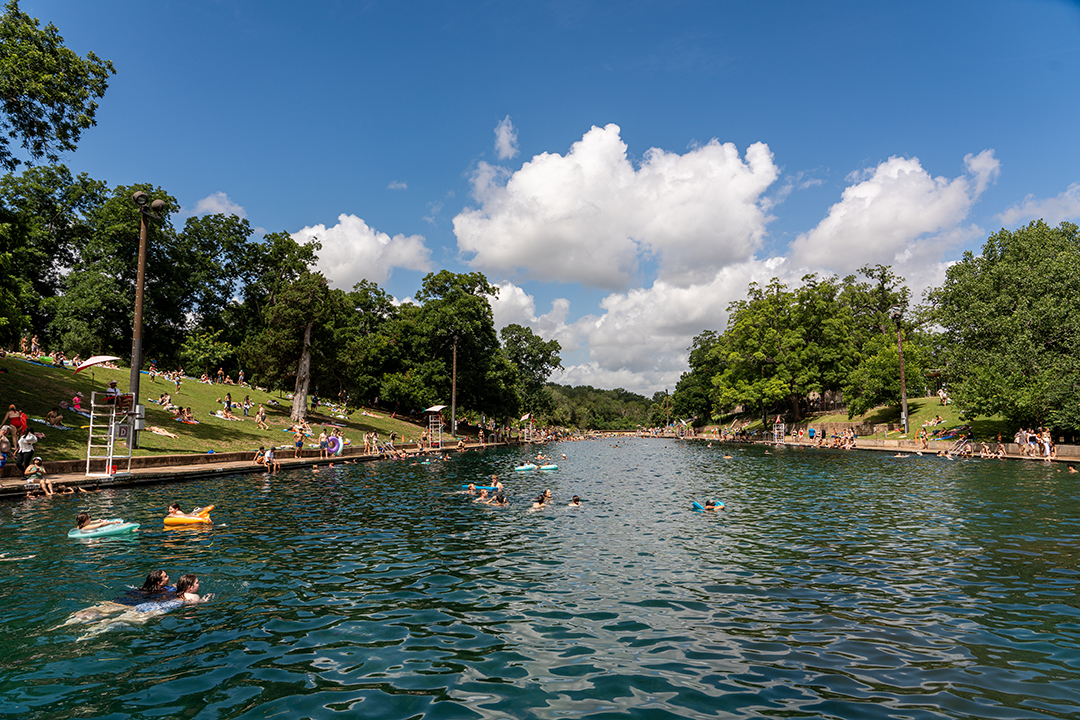
A natural oasis within the 358-acre Zilker Park, the three-acre pool sits up to 18 feet deep and holds at a brisk 68 to 70 degrees year-round, attracting more than 800,000 swimmers a year. The pool is fed by four natural springs via the Main Barton Spring, the fourth largest spring in Texas, which was formed between 5 and 20 million years ago.
People have been coming to Barton Springs since long before Austin's tech revolution. The archaeological record puts human activity at Barton Springs back at least 13,000 years, and the history of why runs a lot deeper than the 18-foot depths by the diving board.
A sacred place first
For centuries before European settlers arrived, Barton Springs served as a spiritual oasis for Indigenous communities across Central Texas. The Tonkawa, Comanche, Caddo, Lipan Apache, and Coahuiltecan peoples were among those who recognized the springs as something beyond a geographic feature. The accounts passed down through colonial records are an imperfect lens, but what they and oral histories suggest is consistent: for multiple communities across generations, this water held ceremonial significance.
About 220 miles west of Austin, in the Lower Pecos Canyonlands, a piece of rock art known as the White Shaman Mural dates to around 400 B.C. Gary Perez, chief of the Coahuiltecan/Pakahua Nation, has studied the mural for years and believes that a curved pictograph with four matching symbols represents an ancient map of Central Texas, marking four sacred springs: San Antonio Springs, San Marcos Springs, Comal Springs, and Barton Springs.
All four connect to the Edwards Aquifer, the underground network of caves and porous limestone that still feeds Barton Springs today. When Perez overlaid the pictograph onto a modern map, the alignment matched. Not every archaeologist agrees with that interpretation, but for Indigenous communities who have carried this knowledge across generations, the springs were never incidental to the landscape. They were central to it.
Every August, that relationship is still honored by a group of women led by Perez's wife, Matilde Torres. The group prays and communes with nature beginning at dawn at San Antonio Springs and ending at Barton Springs in the afternoon.
From Uncle Billy to public land
In 1837, settler William "Uncle Billy" Barton acquired the land around the springs. Known as the "Daniel Boone of Texas," he named three of the springs after his daughters: Parthenia, Eliza, and Zenobia. The former is the primary source for Barton Springs.
By the time Barton arrived, Europeans had already been in the region for a century, with Spanish missions operating nearby in the 1700s. The Indigenous peoples who had held this land for millennia were displaced through a combination of disease, violence, and colonial policy, including a law that legally redesignated Native people as Mexican in an effort to erase their identity entirely.
In the late 1800s, businessman and philanthropist Andrew Jackson Zilker moved to Austin from Indiana, inspired after reading a book about the History of Texas as a child. He started a successful ice manufacturing business and began buying land, including the 350 acres surrounding Barton Springs — in 1901.
Recognizing the area's recreational value, Zilker sold the land to the city of Austin for $100,000 on the condition that it become a public park. That transaction is the reason 800,000 people a year can access this water today. The bathhouse built on the property in 1947 underwent a decades-long, $8 million renovation that was completed in 2022.
The springs' history as public space is not without complexity. Barton Springs Pool was racially segregated for decades, and the swim-ins held there were part of the broader effort to desegregate Austin's recreational facilities until the pool was finally integrated in 1962.
The health benefits are real
Austin summers are not gentle. Triple-digit heat starting in June creates real barriers to the kind of outdoor programming that actually refreshes people rather than just exhausts them. For corporate teams, conference attendees, and incentive groups visiting the city, most of the standard options either move everything indoors or ask people to sweat through something that stops feeling like a benefit somewhere around mile two.
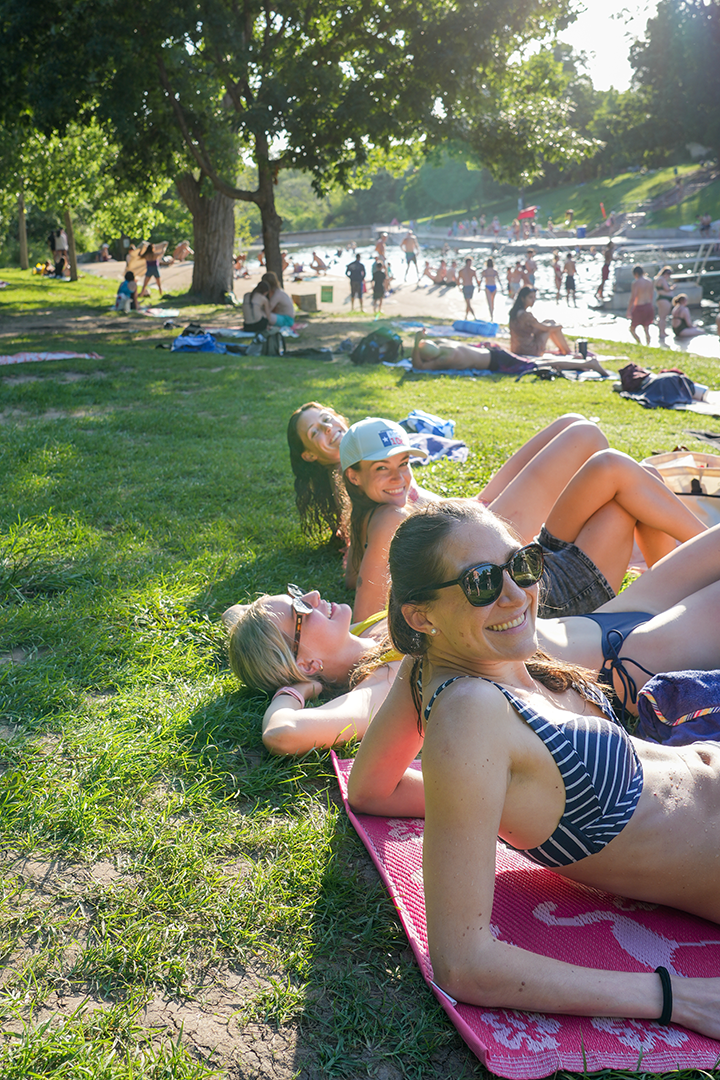
Barton Springs changes that equation. The contrast between ambient heat and spring water amplifies everything the cold immersion does for the body, and it does it in a setting that has been drawing people together for 13,000 years. Two endangered salamander species call the pool home, a reminder that this is an official nature preserve first and a recreational destination second.
Cold Immersion
Constricts surface blood vessels and redirects circulation, then reverses on exit, delivering oxygen and nutrients to fatigued tissue.
Vagus Nerve Activation
Cold exposure activates the parasympathetic nervous system, reducing cortisol and producing a regulated calm that lasts long after you've dried off.
Blue Space Effect
Time spent in or near natural water is linked to documented reductions in anxiety and perceived stress.
The Barton Springs Reset
Austin's ultimate summer reset.
Swift Fit Events built the Barton Springs Reset around the restorative, energizing powers of the water. It's a curated group experience that brings together guided movement, outdoor connection, and Barton Springs swim time designed to leave your team feeling genuinely refreshed rather than just scheduled.
The experience can include guided movement and breathwork, Barton Springs swimming or plunge time, healthy food and beverages, music, hydration stations, and optional paddleboard or kayak add-ons on Lady Bird Lake. We handle the full setup and breakdown. Your group shows up, gets in the water, and leaves ready for whatever comes next.
Ideal for: Corporate teams, DMC itineraries, incentive groups, and planner appreciation experiences.
Sample Inclusions
For many, a trip to Austin isn't complete without a dip in Barton Springs. The springs' reputation for restoration starts to look less like legend and more like physiology.
Limited Time Offer
Book by July 15 to receive a complimentary Summer Upgrade on your first event.
Start Planning Your Event →Sources
- KUT Radio/ATXplained, "Was Austin's Barton Springs sacred to Indigenous people before Europeans showed up?" by Elizabeth McQueen (May 7, 2026)
- AFAR, "Finding Soul and Spirit in Austin's Barton Springs Pool" by Kayla Stewart (October 20, 2021)
- Physiological context from publicly available research.
